
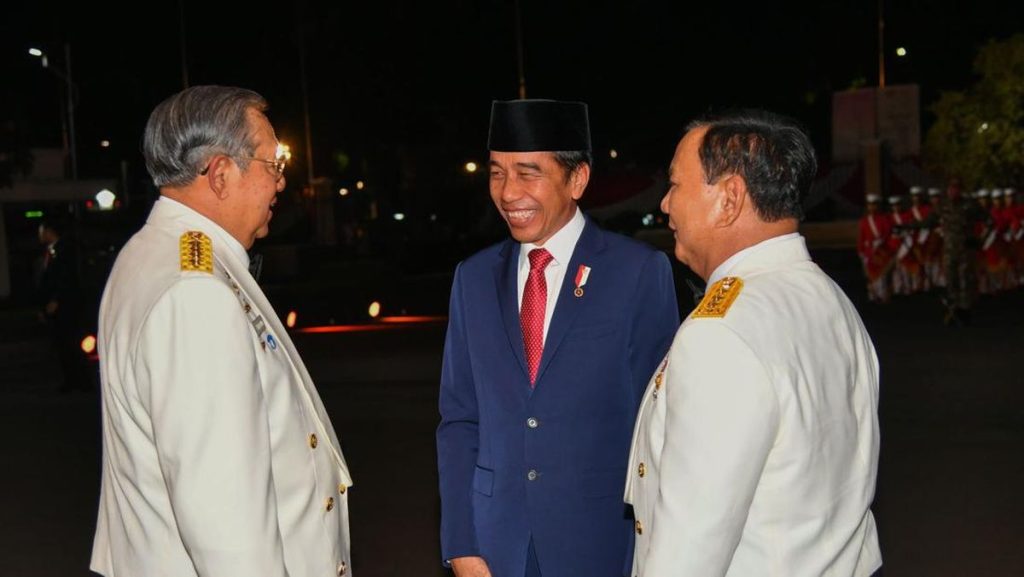
(Fahri Hamzah is Vice Minister of Housing and member of Indonesia’s governing coalition)
Comparing a decade with two years looks unfair at first glance. Joko Widodo governed Indonesia from 2014 to 2024. Prabowo Subianto took office in October 2024. But I am not comparing the number of roads or projects. I am comparing how the country is governed. In less than two years, much of what was treated as normal for a decade has been reopened, examined and corrected.
Jokowi’s legacy is real: toll roads, ports, dams, and the start of Indonesia’s push to process its own minerals. Prabowo served in his cabinet as defence minister and has continued many of those programmes. The difference lies in the character of government. The Jokowi era was about building what could be seen. The Prabowo era is about fixing what had been hidden.
Food: from importer to self-sufficiency
For years Indonesians were told that importing food was cheaper and more practical. In 2024 Indonesia imported 4.5 million tonnes of rice after El Niño hit production. A year later the picture had reversed. Production in 2025 reached 34.69 million tonnes, above consumption of 31.16 million tonnes, and no rice was imported for consumption. Government rice reserves then passed 5 million tonnes, the highest on record. Farmers shared in the gains: their terms-of-trade index reached 125.35 in 2025, the highest in 25 years.
Fertiliser tells a similar story. Shortages had frustrated farmers for years. The government scrapped 145 fertiliser regulations through a presidential instruction, so supply now moves from the Agriculture Ministry to the state fertiliser company and straight to farmers. Since October 2025, subsidised fertiliser prices have been 20 percent lower. The agriculture minister says the cut was achieved without any increase in subsidies, through industrial efficiency and better distribution.
Land: the state reclaims its forests
The most striking figures come from forest enforcement. Between February 2025 and May 2026, a government task force reclaimed 5.89 million hectares of forest land from oil palm plantations and more than 12,000 hectares from mining. That is almost twice the size of Belgium. About 900,000 hectares have been returned to conservation forest, including parts of Tesso Nilo National Park. Between October 2025 and April 2026 alone, the task force paid 31.3 trillion rupiah into state coffers from fines and other enforcement against illegal activity in forest areas.
Plantations of that size do not appear overnight. They grew over many years and across several governments while the state looked away. Enforcement has even reached decisions the state made itself. In March 2026, the task force seized about 1,600 hectares of protected forest held by a subsidiary of one of the country’s largest property conglomerates. The site had been designated a National Strategic Project under Jokowi, a status revoked in September 2025. Few governments publicly reverse their own earlier decisions.
Corruption: record recoveries
State funds recovered through final court rulings in major corruption cases fell to 4.6 trillion rupiah in 2024. They then rose to 24.5 trillion in 2025 and 40.5 trillion in the first half of 2026 alone, already the highest annual amount since at least 2020. The largest cases involve the tin trade from 2015 to 2022, with estimated losses of up to 300 trillion rupiah including environmental damage, and crude oil management at Pertamina from 2018 to 2023, with losses of 285 trillion rupiah. Almost all of this wrongdoing took place in the previous decade. What has changed is the will to pursue it, including in the government’s own flagship programme: prosecutors have named six suspects, among them former leaders of the National Nutrition Agency, in a governance case involving the free-meals programme.
Data: ending blind welfare spending
For years, welfare spending worth hundreds of trillions of rupiah rested on data scattered across agencies. The government has merged it into a single national socio-economic database, with striking results. The social affairs minister found families in Central Java who had received aid for 16 to 18 consecutive years because the records were never updated. More than two million ineligible recipients were removed in the second quarter of 2025 alone. At the same time, 4.33 million poor families who had been missed were brought into welfare programmes.
Legacy debt: a leader who takes responsibility
The Jakarta–Bandung high-speed railway was sold as a purely commercial project that would never burden the state. In reality, the US$7.3 billion project is 75 percent funded by China Development Bank loans. The Indonesian state-owned consortium that holds the shares lost 5.13 trillion rupiah in the first half of 2026 alone. Prabowo did not blame his predecessor. In November 2025 he said the government would take over debt payments of about 1.2 trillion rupiah a year. Responsibility for the debt moved from the sovereign fund Danantara to the Finance Ministry on 15 September 2026.
People: nutrition, health, schooling and housing.
The state now reaches directly into children’s meals, clinics and classrooms. As of August 2026, the free-meals programme served 57 million people through 27,485 kitchens. Reforms continue: every kitchen must now hold a hygiene certificate, funding is being redirected to the poorest regions, and 1,653 international and elite private schools have been dropped from the programme.
Free health screening reached 70.8 million people in 2025, and 73.8 million by the end of July 2026, already more than the whole of 2025. New boarding schools for the poorest children opened at 166 sites and are expected to hold about 45,000 students in 2026, with more than 100,000 targeted for 2027. Subsidised mortgage lending reached 278,868 homes in 2025, the highest since the scheme began in 2010.
The macro picture
The economy grew 5.61 percent year on year in the first quarter of 2026. Between February 2025 and February 2026, 1.9 million jobs were created and unemployment fell to 4.68 percent. The poverty rate fell to 8.07 percent in March 2026, continuing a decline that began in 2023.
A message to foreign readers
International coverage often reads Prabowo through one of two old lenses: his military past, or simple continuity with Jokowi. Both miss what is actually happening. Indonesia is a state reclaiming authority over its land, its data, its food supply and its financial obligations. Many leaders today build popularity by finding enemies abroad. Prabowo’s main fights in these two years have been at home, against illegal land holdings, import dependence, corruption in natural resources and dishonest data.
Not everything has gone well. Public approval has slipped: pollster SMRC recorded 51.1 percent in July 2026, while Tempo Data Science measured 37 percent and Poltracking 55.1 percent in August, all below late-2025 levels. Fixing problems is never popular, because every correction disturbs someone’s comfort. A confident nation does not fear such numbers. It uses them to correct course.
The real question is not which president is better. It is why so many problems were left unresolved for so long. Two terms showed Indonesia what building means. These two years are showing what fixing means. The standard every leader should now be held to is simple: do not pass problems on, solve them.